Sunday, May 26, 2024
Comic Reader Résumé: Early June, 1986
I didn't realize how off my May comics reading was until I came back for June, and all the books that double-shipped in April that were then absent a month. I'm pretty sure that my brother came back for Alpha Flight #38, the last part of the one with the zombie ghost pirate with the pestilence and all the Shadow of the Hawk shamen and the Canadian kaiju and whatever. Bill Mantlo was doing some cool weird horror stuff in here, and I especially like when Snowbird goes full Sasquatch primal rage and each swipe of their claws makes the pirate go Benjamin Button. I like to think that in 100,000 years, the sentient upright cockroaches will read that paragraph and it will become one of their great archeological mysteries. But also, the book failed me as a kid, because it was both too weird and not weird enough. There's a whole B-plot with Namor and Marina involved in an Atlantean military conflict that was just-- yawn. Dave Ross' art is straight super-hero, but it's being compromised by Gerry Talaocs inks, which recalls but never reaches the heights of the great '70s Filipino horror tradition from guys like Alcala and DeZuniga. The ingredients aren't gelling, and whole approach feels like a half-measure.
Mike Zeck had a whole run on Captain America that was awesome inside & out, then became one of Marvel's top cover artists, including a return to Cap for many iconic frontpieces. With so many iconic images from this time period coming from Zeck, it's easy to forget his work on Captain America #321. When J.M. DeMatteis rage quit the book over the editor-in-chief retroactively cancelling an already approved new direction for the book, and Jim Shooter adding insult to injury by rewriting chunks of his last issue, Cap had something of a lost year. Editor Mark Gruenwald eventually took over as writer, but he was never a marquee name, and his artists weren't going to bring any heat to the book. I think Gruenwald made the conscious decision to court controversy, through heated political content, shocking large scale deaths, and so forth, to bring attention to the title. The United States was re-embracing militant jingoism, reflected in Mike Zeck's moving on to the scorching hot Punisher mini-series, and a long memorable run of G.I. Joe covers. I think Gruenwald wanted to trap some of that heat with this month's image of a howling mad Star-Spangled Avenger firing an uzi. It was a provocative image that grabbed eyeballs, and started a dialogue that has been lost to time, as it's memory was buried by other bold moves. But at the time, it was such a hot ticket that I couldn't find a copy of my own, and had to glom what I could about what happened from those peripheral conversations.
Given how much I was waxing Mike Zeck's car, you'd think I'd be more excited to cover Captain America Annual #8. Everyone knows the cover of Cap's shield being raked by Wolverine's claws, and I've lost track of how many times it's been swiped. But we don't talk much about the interiors, which are... fine. There's a lot of Logan at the front of this story, and you can see that's where Zeck spends most of his time and interest. It wouldn't shock me if he'd requested to draw the fan favorite character, but he's also competing with recent work on the Canuck by John Byrne, Art Adams, Paul Smith, Frank Miller, Barry Smith... even John Romita Jr. had a quite iconic Wolverine cover a couple months prior. Zeck drew Logan's hair weirdly plastic-- more like Deathbird's feathers, and he skimped a bit on the body hair. It's still good, but in that company, doesn't really stand out. Then the issue drags on, with Wolverine and Captain America in parallel investigations of a giant robot, and you can tell inker John Beatty is picking up more and more of the slack. We're dozens of pages in before the heroes finally meet, and their fight spans one half of two pages before they team up against the robot. After a few pages of tussle, the robot escapes, and they... split back up again? So then there's more of the detective work that fans of these two characters crave, followed by another team-up, where the main use for Wolverine's claws is to act as a lever so that Cap can wack his hands with his shield to wedge off the robot's adamantium head. Finally, three pages of the heroes... chasing the guy operating the suit? By this point, you can't even tell who's drawing the issue if you take the pages out of context. This tale is such a damp squib after that firecracker cover. A real waste of characters, time, and talent on a book that really needed a back-up feature instead of an exhausting length.
I wasn't too thrilled with G.I. Joe a Real American Hero #51,
an action-heavy issue with a John Byrne cover involving Sgt. Slaughter and the Dreadnoks. I probably just tossed through lil' bro's copy. Same went for The Incredible Hulk #323, which was mostly a lot of babbling in the aftermath of the battle with the Avengers. There was a metatext about Bruce Banner fading into immateriality with his connection to the Hulk, so Vision facilitated their re-bonding. Marvel Tales shook me loose entirely this month, jumping from reprinting the early John Romita run to a triple-sized, double-priced collection of stories preceeding the deaths of Gwen Stacy and Green Goblin. I don't know what precipitated the change, and it would only last another issue before switching format to something I'd find more palatable.
The Marvel Saga, the Official History of the Marvel Universe #10 is a big one, as the Keith Pollard cover announces the debuts of the X-Men and the Avengers. The origin of Doctor Strange is not so heralded, despite taking up much of the first ten-plus pages. After some capsules, we get a lot of Namor's Atlanteans attacking New York and Dr. Curt Conners becoming The Lizard. The origins of Beast and Marvel Girl are bound up with the X-Men debut.
The Official Handbook of the Marvel Universe Deluxe Edition #10 falls a bit behind the times by relegating a squatting Punisher to the back cover in favor of... Rachael Summers, Puck, and Power Man? Ouch. "Paladin to The Rhino" starts with a Brian Bolland Paladin, of all combinations. He does freakin' Purple Man in here, too. Stan Woch's Plantman is offensively cool. Like, how dare you waste the effort it took to make this mort look like a menace? He must have lost a bet or something. Just... why? David Ross offers an oddly moody Puck, but this was mostly a solid if unexceptional issue. I really liked John Buscema's Red Wolf, though.
I think maybe there was a gap in seeing my brother, because I passed on enough issues of Uncanny X-Men that I felt compelled to buy #209. The battle between Nimrod and the Hellfire Club was too good to resist, especially with multiple fatcat white guys dying.
I was never wild about Bob McLeod finishes, so even with Mike Zeck joining Peter David on The All-New, All-Daring Peter Parker, the Spectacular Spider-Man #118, I just passively gave my brother's copy a toss. It was the resolution of the subplot about the kid who accidentally vaporized his abusive father with energy powers, and turned into a S.H.I.E.L.D. free-for-all wheere the kid gets gunned down.
X-Factor #8 had breakdowns by Marc Silvestri, and he was good at drawing Mystique and her Freedom Force. I like Jackson Guice, but by this point he was so associated with these awful early issues, it's nice to start putting daylight between the Layton & Simonson runs.


Sunday, May 19, 2024
JLApe: Gorilla Warfare (1999)

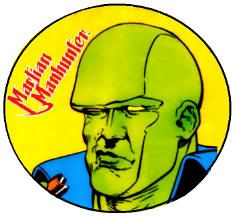
Elsewhere, relations between Gorilla City and the human world heated up and cooled down inside a week, with the assassination of Solovar and the rise of the Simian Scartlet that launched hostilities against the United Nations in JLA Annual #3. Then gorilla agents assailed Bludhaven and Atlantis in Batman Annual #23 & Aquaman Annual #5. As explained by Martian Manhunter in his second annual, "Led by simian sorceress Abu-Gita, apes invade the island nation of Themyscira." [Wonder Woman Annual #8]


The Gorilla incarnation of Kyle Rayner was unable to restore himself to humanity on his own, so he was assisted by J'Onn J'Onzz in Green Lantern Annual #8 (October, 1999). "Thanks to my rather duplicitous efforts, Green Lantern was restored to normal, as has been the rest of the JLA." In fact, the entire episode of Gorilla Warfare was then resolved in Martian Manhunter Annual #2 (October, 1999)...
Sunday, May 5, 2024
DC Special Podcast: Another Hour with Julia Raul
To permanently save this episode’s MP3 file to your computer or other listening devices, right-click the link below to bring up sub-menu and select “Save Target/Link As…” Pick where you want it to save to, and you’re set.
Download MP3

Coarse Language: Listener Discretion is Advised
Meanwhile... A roaming b-roll conversation with special guest Julia Raul. JLA artists, '90s super-hero cartoons, Hitman, Azrael, Bane, Deadpool, Maxima, Steve Ditko, queer representation in characters, mixing DC with Wildstorm, and far more tangents than can be summarized here...
We Think You're Special!
- Hashtag us as #RSPDCS
- Friend us on Facebook
- Email us at rolledspinepodcasts@gmail.com
- Tweet us as a group @rolledspine, or individually as Diabolu Frank & Illegal Machine. Fixit don't tweet.
- If the main DC Bloodlines blog isn't your thing, try the umbrella Rolled Spine Podcasts.
Tuesday, April 30, 2024
Comic Reader Résumé Podcast #22
(May 1986)
Internet Archive ◫ MP3 ◫ Spotify

ré·su·mé [rez-oo-mey, rez-oo-mey] noun 1. a summing up; summary. 2. a brief written account of personal, educational, and professional qualifications and experience, as that prepared by an applicant for a job.In Comic Reader Résumé, I use Mike’s Amazing World of Comics to travel back through time via his virtual newsstand to the genesis point of my lifelong collecting of comics. From there, I can offer a “work history” of my fandom through my active purchasing of (relatively) new comic books beginning in January of 1982, when my interest in the medium went from sporadic and unformed to routine on through compulsive accumulation. To streamline the narrative and keep the subjects at least remotely contemporaneous, I will not generally be discussing what we call back issues: books bought long after their publication date. Sometimes, I will cover a book published on a given month that I picked up within a year or so that date, and I give myself an especially wide berth on this aspect in the first couple of “origins” episodes. We’ll get more rigidly on point as my memories crystallize and my “hobby” spirals out of control into the defining characteristic of my life (eventually outpacing squalor and competing neuroses.) It’s part personal biography, part industry history, and admittedly totally self-indulgent on my part.
This episode includes Elvira's House of Mystery #6, Fantastic Four #293, G.I. Joe a Real American Hero #50, Marvel Age #41, Marvel Saga: the Official History of the Marvel Universe #9, Masters of the Universe #3, Son of Ambush Bug #2-3, Spectacular Spider-Man #117, The Mighty Thor #370, Uncanny X-Men #208, Web of Spider-Man #18, West Coast Avengers #12, X-Factor #7, and more!
“Transcripts”
- Early May, 1986
- Late April, 1986
- #CRRésumé?
- rolledspinepodcasts@gmail.com
- Comment on Résumé page or Rolled Spine Podcasts.
Sunday, April 28, 2024
Comic Reader Résumé: Late May, 1986
As I've probably mentioned in the past, but just to recap, I manage to evade John Byrne's Fantastic Four better than most in my generation. I remember seeing the Diablo cover with the FF as candlesticks and thinking that looked cool. I think I tossed through the triple-sized 20th anniversary issue. I believe the sideways issue was at a barber shop that I went to, and the same may have been true of The Masque of Doom photo cover. I of course got the She-Hulk papped topless issue, and one of the "Dark Sue" Malice issues. Ultimately though, I preferred She-Hulk as an Avenger, and I bought more Thing solo comics than FF ones up to this point. I think I got Fantastic Four #293 out of a 3-pack with something else I wanted more, but at least it was another She-Hulk cover. Her, I liked. The Storm-Richards Family, never. Reed was like a pedantic high school science teacher, Sue like a wallpaper Kindergarten teacher, and Johnny felt like a pretty boy bully somewhere in between. I was so invested in the Fantastic Four that I struggled to figure out how it related to the movie Fantastic Voyage. The shrinking one with Raquel Welch, not the Sinbad one. I was ignorant, not an imbecile. The 1967 Hanna-Barbara cartoon ran really early in the morning, and the 1978 one with H.E.R.B.I.E. was too lame and short lived to rate much attention from me. As you've probably noticed, I was quite the Marvel Zombie at this point, and the FF felt like a DC team in the most pejorative sense. You had the one crazy kid in the padded cell screaming that he was Dr. Doom, and then most of the issue was doing science stuff in the desert to a big ink blob. Toward the end, the team get sucked into some future state where the original FF were worshiped as gods, which felt very Mort Weisinger before I knew what that meant.
Thor was another one of those old-timey Kirby-type books that did not appeal to me. I tossed through the one with Dracula as a back issue. The Walt Simonson stuff had a great sense of power to it, and I did eye that first Beta Ray Bill cover and his continuing adventures, the frog stuff, and that one killer spread from a Marvel Age annual where the Asgardians were using conventional assault weapons. Nothing ever sealed the deal though, and quite randomly, I dipped in on a fill-in. I don't recall if I bought The Mighty Thor #370 on purpose or out of three-pack, quite probably the same one as the Fantastic Four. I wonder what the third book would have been-- maybe an Uncanny X-Men? Anyway, it had a nice inventory pin-up cover by Big John Buscema, but the interiors were inked by P. Craig Russell, for a very contrasting look. Both Thor and FF had gorgeous John Workman lettering, which couldn't have hurt. The story was a western titled "Easy Money," and was written by Jim Owsley, the future Christopher Priest. It was about a wannabe Bat Lash style card sharp who has a run-in with a Lee Van Cleef type with a band of murderous outlaws planning a train robbery. If you say that sounds like a typical Thor story, that's exactly why I liked it, as it had a bit of a Highlander vibe, but in the Weird West. To say more would spoil it, but despite spending years in obscurity, it seems to have reappraised and lauded over the years, recently added as a bonus story in the final Black Panther by Christopher Priest Omnibus that sits on my bookshelf.
I'm pretty sure that my brother bought The All New, All Daring Peter Parker, The Spectacular Spider-Man 117. The cover featuring Black Cat battling Dr. Strange is very familiar. It was another "Missing in Action" tie-in with a blink & you'll miss it Sabretooth cameo. Also, the last page with a woman drinking coffee in the mountains near Spidey's shredded costume, unquestionably by a different art team than the main story, is a solid memory for me. However, the actual story by Rich Buckler and a young Dwayne Turner, wherein they give Black Cat her equivalent of Dinah Lance's jazzercise outfit, drains all the energy out of me just by looking at it. I never read this thing.
Weirdly, Louise Jones is credited as writing X-Factor #7, even though she was Simonson last issue and Walt will be penciling the title in a few months. I bring this up mostly because the actual issue offers nothing of interest. This is the one with the big bald guy and the slug guy. Also, this was during that period where the team wore uniforms and pretended to be Ghostbusters but mutants, while also wearing their X-Factor costumes and supporting mutants. But both these groups have five members with distinct body types, only one girl who's a redhead on both teams, and one guy who wears red glasses per team. Who fell for this?
I don't recall if I ever bought the two-issue, double-length Lois Lane mini-series by Mindy Newell and Gray Morrow. I just know that it haunted the quarter bin at Marauder Books in 1989, and that wasn't the only shop I could say that about. Even if I did finally pick it up to own, I've yet to read it. And hey, while I'm shouting out Marauder's clearance bins, let me also mention other frequent detritus like Independent Comics' The Epsilon Wave, Mr. Monster's Hi-Octane Horror #2, Nervous Rex, various issues of Eclipse's New Wave, Blackthorne's Pre-Teen Dirty-Gene Kung-Fu Kangaroos #1, Elite's SeaDragon, Aircel's Stark Future #1, and Ocean Comics' Street Fighter. I often use the Champions RPG as a shorthand for uninspired, plainly derivative, fannish junk characters in pedestrian stories by anonymous journeymen and never-wases. This is in part because I fished Eclipse's adaptation, Champions #1, out of these bins, and it was the platonic ideal of basicness. It made the New Universe look like Watchmen by comparison.
Lil' bro might have had a copy of Star Comics' Masters of the Universe #3. He definitely had figures of Orko, Battlecat, Prince Adam, and probably the cover-featured Slime Pit. He was a prolific collector, who owned most of the 1985 and 1986 figures. Just at a glance, I recognize Moss Man (a repurposed Beast Man,) Roboto with the transparent chest that let you see his gears, Sy-Klone, Two Bad with two heads and a pair of action-swinging arms, Stinkor, Spikor, Leech with the suction cups, Mantenna with the bug-out eye-stalks, Modulok with two heads and six insect legs, Extendar with techno-expanding neck and appendages, Rio Blast-- who looked like a redneck crossover with the C.O.P.S. line, King Hiss-- who was made out of snakes inside a removable human suit, and some of the stupid Transformer guys that turned into rocks. He also had a number of vehicles, but I didn't care as much about those. Battle Bones sticks out though, because it was a dinosaur skeleton with hooped ribs that doubled as a carrier for a bunch of figures. We both had color variations on Hordak and Grizzlor, mine with the lighter brown fur and his near-black. The Horde Trooper was featured in this comic, and at first I though he had one, but now that I look, I'm not so sure. All this is to say that the comic looked like kids' stuff, so I skipped reading it.
If there's one thing I'd rather not have to write up in one month, it's Son of Ambush Bug, and yet here we're back for more or less a third helping. I do have angles though. DC Comics fans talk a lot about the impact of Crisis on Infinite Earths, and particulars like how Roy Thomas got hosed by losing access the Golden Age heroes amidst the obliteration of Earth-2 from continuity. But what about Julius Schwartz?
After Mort Weisinger lost his editorship over Superman, his life spiraled, and he was destitute when he died. Nothing so dramatic happened with Julie, but after line of DC Science Fiction Graphic Novels adaptations floundered in 1985, and with the massive editorial overhauls of 1986, Schwartz was more or less shown the door. He would continue as a sort of goodwill ambassador for DC Comics along the lines of Stan Lee, with some sort of stipend involved, but as a powerful figure, the man was done. And in this very issue of Ambush Bug was an ad for the Man of Steel mini-series, with Andrew Helfer as the new overseer of the Superman line, and John Byrne the primary creative force who was intentionally erasing much of the body of work Schwartz had commissioned for that character since the 1960s. It's hard not to see the largely plotless excesses of Son of Ambush Bug as a sort of primal scream of rage and quiet whimper of futility at the injustice of its creative team's straits. Everyone involved was losing "their" DC, and probably their financial welfare, and also having their memories and legacies scrubbed before their eyes.
The book goes to dark places, as when a secret government operation tries to use the Ambush Bug suits left on his many corpses to develop agents who could teleport, only to learn the suits were literally devouring their wearers. Or how the tossed-off gag of an Ambush bug-fronted super-team from the first mini-series was now seeing its underdeveloped membership committing suicide. And that's before they die a terrible running gag about iguanas into the bombing of Hiroshima. But again, I found this madness engrossing, trying to figure out mysteries about what I'd miss that were never meant to even be considered, much less solved. In retrospect, everyone was just filling pages, and there's a genuine underlying anger to the anti-humor.
I've heard that Giffen would often just draw random things and hand off the pages to scripter Robert Loren Fleming to figure out what to do with, not offering any notes or suggestions. I tend to think that's why this mini-series is amused with itself, but not actually directing any sincere humor toward an audience. It's all a hostile meta in-joke, with the embodiment of capricious editorial feat in the cosmic villain The Interferer turning the creatives into his whipping boys. And yet, I adored the art, the constant breaking of the fourth wall, the jokes lobbed by and against the various named members of the creative team. Schwartz is clearly absentee, but he gets his turn. For instance, the issue is sandwiched between splash pages of a barely clothed airhead bimbo who hosts the comic, and in the end is left in the clutches of Schwartz, which reads a lot different after Colleen Doran's accusations that Schwartz was a sex pest. I have no doubt that Giffen's jab at Jules were affectionate, but even here, there's a grim undercurrent. Web of Spider-Man #18 was I think the last part of "Missing in Action," and it was about how anyone who thought that scraps of Spidey's costume lying around after a battle meant that he was dead was a dummy. Like, Web-Head pioneered torn costumes. So he was running around, beat up and half naked, doing a reenactment of a Macon County Line or Born Innocent or one of those other movies where regular folk are railroaded into prison by crooked southern authorities. Anyway, Peter eventually got loose and hitchhiked home. There's also a teaser for the arrival of Venom. This was another of my bro's books. Easily the most interesting thing was Kyle Baker inking Marc Silvestri. West Coast Avengers #12 was I think another bro-chase, which I recall mostly for the debut of Wonder Man's red & green costume, which I still thinking is among the most hideous suits ever worn by a mainstream hero. I think JLGL drew it for OHOTMU, and if he couldn't salvage it, nobody could. Speaking of OHOTMU, there's a trio of new villains introduced, and ZZZAX with three z's will perpetually be thed last entry in future volumes. Quantum was trying to compete with Wonder Man's couture, so the only one to catch my eye was Halflife, a blue-skinned zombie hooker almost certainly inspired by Linnea Quigley's character from Return of the Living Dead. The final splash featured Graviton, who I took to be a low rent Magneto, and have yet to be disabused of that notion in 38 years. The blue & white suit looks good, though.
After Mort Weisinger lost his editorship over Superman, his life spiraled, and he was destitute when he died. Nothing so dramatic happened with Julie, but after line of DC Science Fiction Graphic Novels adaptations floundered in 1985, and with the massive editorial overhauls of 1986, Schwartz was more or less shown the door. He would continue as a sort of goodwill ambassador for DC Comics along the lines of Stan Lee, with some sort of stipend involved, but as a powerful figure, the man was done. And in this very issue of Ambush Bug was an ad for the Man of Steel mini-series, with Andrew Helfer as the new overseer of the Superman line, and John Byrne the primary creative force who was intentionally erasing much of the body of work Schwartz had commissioned for that character since the 1960s. It's hard not to see the largely plotless excesses of Son of Ambush Bug as a sort of primal scream of rage and quiet whimper of futility at the injustice of its creative team's straits. Everyone involved was losing "their" DC, and probably their financial welfare, and also having their memories and legacies scrubbed before their eyes.
The book goes to dark places, as when a secret government operation tries to use the Ambush Bug suits left on his many corpses to develop agents who could teleport, only to learn the suits were literally devouring their wearers. Or how the tossed-off gag of an Ambush bug-fronted super-team from the first mini-series was now seeing its underdeveloped membership committing suicide. And that's before they die a terrible running gag about iguanas into the bombing of Hiroshima. But again, I found this madness engrossing, trying to figure out mysteries about what I'd miss that were never meant to even be considered, much less solved. In retrospect, everyone was just filling pages, and there's a genuine underlying anger to the anti-humor.
I've heard that Giffen would often just draw random things and hand off the pages to scripter Robert Loren Fleming to figure out what to do with, not offering any notes or suggestions. I tend to think that's why this mini-series is amused with itself, but not actually directing any sincere humor toward an audience. It's all a hostile meta in-joke, with the embodiment of capricious editorial feat in the cosmic villain The Interferer turning the creatives into his whipping boys. And yet, I adored the art, the constant breaking of the fourth wall, the jokes lobbed by and against the various named members of the creative team. Schwartz is clearly absentee, but he gets his turn. For instance, the issue is sandwiched between splash pages of a barely clothed airhead bimbo who hosts the comic, and in the end is left in the clutches of Schwartz, which reads a lot different after Colleen Doran's accusations that Schwartz was a sex pest. I have no doubt that Giffen's jab at Jules were affectionate, but even here, there's a grim undercurrent. Web of Spider-Man #18 was I think the last part of "Missing in Action," and it was about how anyone who thought that scraps of Spidey's costume lying around after a battle meant that he was dead was a dummy. Like, Web-Head pioneered torn costumes. So he was running around, beat up and half naked, doing a reenactment of a Macon County Line or Born Innocent or one of those other movies where regular folk are railroaded into prison by crooked southern authorities. Anyway, Peter eventually got loose and hitchhiked home. There's also a teaser for the arrival of Venom. This was another of my bro's books. Easily the most interesting thing was Kyle Baker inking Marc Silvestri. West Coast Avengers #12 was I think another bro-chase, which I recall mostly for the debut of Wonder Man's red & green costume, which I still thinking is among the most hideous suits ever worn by a mainstream hero. I think JLGL drew it for OHOTMU, and if he couldn't salvage it, nobody could. Speaking of OHOTMU, there's a trio of new villains introduced, and ZZZAX with three z's will perpetually be thed last entry in future volumes. Quantum was trying to compete with Wonder Man's couture, so the only one to catch my eye was Halflife, a blue-skinned zombie hooker almost certainly inspired by Linnea Quigley's character from Return of the Living Dead. The final splash featured Graviton, who I took to be a low rent Magneto, and have yet to be disabused of that notion in 38 years. The blue & white suit looks good, though.
Saturday, April 27, 2024
Comic Reader Résumé: Early May, 1986
Greetings gills and ghouls, it's that time again for the hostess with the mostest, in Elvira's House of Mystery #6. Under another great Mark Beachum cover with a fairly solid likeness that enthusiastically incorporates Elvira's plunging neckline is a slightly frustrating conceit. This issue is meant to be read sideways, spine up. On the plus side, that means nearly twice as much story this issue. On the down side, each page features two standard story pages, squished to fit with a big gap in the middle, and it's pretty good art done this disservice.
Tom Grindberg and Jim Fern mind Elvira's assets in the introduction that segues into the yarn "A New York Yankee in King Arthur's Court!" with the Bierbaums. It's clear Tom and Mary are fans, and produced this one specifically for this magazine, because Elvira continues to break in throughout the tale to narrate and quip. Grindberg is very much in Neal Adams mode as a baseball player wrestles with Medieval Times, and Elvira's dress wrestles with her curvy figure.
Next is "Subject for Post-Mortem" by Robert Kanigher and George Freeman, where a grave robbing physician ends up on the wrong end of the scalpel. "Two-Edged Sword" by Elizabeth M. Smith, Charles Nicholas, and Joe Giella comes across a bit hoary, especially when the last panel offers an Elvira that looks more like the Mark Beachum interstitial pages, and could easily have once been a Cain corner instead. Heck, there's even a painting of Cain on the next panel following, as if nodding to a paste-in.
The conquistadors of Kanigher & Jess Jodloman "You'll Beg to Die!" meet a grisly fate in another Adams-indebted piece, though this one with additional Filipino flair. Again, the pasted-in Beachum Elvira in the last panel gives up the game of this being a converted inventory story from some previously canceled horror anthology. There's no room for that contrivance in Joey Cavalieri & Ric Estrada's "Just Like Clockwork," which looks like it was drawn in the same time as the Kubrick flick they're referencing. The style and fashions would have been outdated a decade earlier, so I have to assume Cavalieri just scripted pages that had never made it to the lettering stage.
But just so you don't forget who's running this show, Beachum comes back for one more va-va-va-voom pin-up. Hopefully someday any rights issues can be untangled to reprint his pages in proper scale, hopefully while Elvira's still around to sign it. Oh, and her fan club springs for an ad, offering an autographed 8x10, bumper sticker and more for just $6.50 plus postage. The high contrast Xeroxed photos only add to the resemblance in the Grindberg & Beachum pages. The next issue had four pages of new interstitials to make up for the rest obviously being repurposed inventory from one of the axed science fiction anthologies, and even with a Bill Sienkiewicz cover, I couldn't see my way to supporting that one. My half-brother splurged on the double-sized $1.25 G.I. Joe a Real American Hero #50. The Rod Whigham-drawn lead story was "The Battle of Springfield," bringing to a head a long simmering subplot about an entire suburb having been taken over by Cobra infiltrators. This one was packed with memorable moments, like the spies burning documents in the fireplace as tanks roll down main street, or a dad preparing to shoot the family dog in front of his kids before evacuating. Serpentor was still cool at this point, topless in jeans adorned only by the king cobra cowl and a cape. He lustily plunges into the fray, and when shot, cauterizes the wound with a heated knife. Storm Shadow is resurrected in a chemical vat, and is none to happy about it. Then there's a preview story for the upcoming spin-off G.I. Joe Special Missions, with returning original artist Herb Trimpe. He was previously assimilated by Bob McLeod, but here he inks himself, taking a cue from Tony Salmons and Kyle Baker with a loose, sketchier, more contemporary style. This one has a lot of grit, with the Joes facing airplane hijackers, without shying away from the violence of such a terroristic act. I think this was the first story I ever encountered to feature tasers. Good stuff! To my mind, a cover with a mass of heroes carrying the massive form of an unconscious Hulk is a lot more memorable than another brawl, but as it happens, The Incredible Hulk #322 is mostly an exceptionally brutal slugfest. It fulfills the promise of recent, lackluster issues, even if I'll never get used to Dell Barras embellishing Al Milgrom. I don't think Marvel Age was ever on the newsstand, but my half-brother had access to a comic shop, and would sometimes pick it up for a pair of quarters. #41 offered a fumetti cover of Stan Lee, but was otherwise a lackluster issue. I did get use out of "The Marvel Age," a serialized text feature on Marvel Comics history that filled in the gap between Marvel Saga and my '80s purchases, this month covering 1972 in first installment. The Marvel Saga, the Official History of the Marvel Universe #9 downgrades the new Angel origin story pages from Sienkiewicz to Steve Geiger, which is not helpful. The Keith Pollard cover offering the initial Spider-Man/Doctor Octopus battle doesn't much salve that wound. There's also a lot of Vulture, Kree, and Red Ghost material here. The book is moving closer to a capsule index over the more narrative synopses of previous issues, so Puppet Master and Radioactive Man only rate a panel each. The Wasp gets a few pages, but it's hard not to notice the disproportionate space afforded Spider-Man stories involving losers like the Tinkerer. Sometimes it feels like the book wants to be Marvel Tales instead of Marvel Saga. And now, a brief review of my history with Keith Giffen to date: I had one of the Flash issue with a Giffen Dr. Fate back-up, from when he still drew a little like George Perez. Ditto his two page advertainment piece from the first 1983 DC Sampler. I was also drawn to house ads for The Omega Men and the Baxter format Legion relaunch, though between the two, Giffen's style had changed so much as to be nigh unrecognizable from one to the other. Sometime around 1983, Giffen was exposed to the Argentine artist Jose Munoz, known for a loose, high contrast style somewhat like what Steranko had used on Chandler and Miller would use on Sin City. This exposure effectively broke and rebuilt Giffen, who locked himself in a room for days, just studying every panel of Munoz. Afterwords, his approach to art was forever change, to the point where outlets like The Comics Journal accused Giffen on plagiarism, but he always swore that he never had a Munoz page on his table when he was drawing. You know how Brad Pitt used to adopt the fashion style of every woman that he was in a relationship with? Giffen was like that with artists, beginning with Jack Kirby, and going through periods of heavy Kevin Maguire and Simon Bisley influence after having worked with them. Munoz though, was never a commercial success in the west, and between the critics calling his a swiper and the fanboys detesting how the Munoz look applied to super-heroes, Giffen committed career suicide. He went from a fan favorite to a pariah almost overnight. The one project that he was able to hold on to and experience some modest success with was his humor character, Ambush Bug, featured in a string of Superman comics and a solo mini-series.
I missed all that stuff. I came on with the second issue of the follow-up mini-series, Son of Ambush Bug. Now, I believe my interest was piqued by the first issue's cover, in which Ambush Bug is essentially buried in sensationalistic cover blurbs. Yet, I did not pick it up. Rereading it today, it might have been the extended manga parody starring the Japanese Ambush Bug battling a kaiju. Maybe I just wanted something else more and missed my shot. But I did buy the second issue, with an almost entirely red cover depicting Ambush Bug at the gates of literal Hell. Let me tell you-- I went back and bought the first mini-series in 1987, and most of the other stuff in 1989. The Ambush Bug Stocking Stuffer was one of many swell holiday parodies by the Jewish creator. The pre-1986 Bug material remains some of the most hilarious western super-hero material ever created. But Son of Ambush is not funny. In retrospect, it's about the depression, regret, and paranoia surrounding what Giffen probably felt was his second and final self-sabotaging of his artistic career, assuming he'd end up back selling vacuums or working at a chemical plant. Whether another example of slitting his wrists, or, more likely, an editorial mandate from a "New DC" wanting to be taken with the utmost seriousness in the Post-Crisis landscape, the mini-series was denied access to, basically, the entire DC Universe. There are references to name villains represented as in-story hand puppets, with Swamp Thing portrayed by a potted house plant, and Superman's discarded boot makes appearances. Otherwise, a book that by design was an anarchic take on DC properties had to create everything from whole cloth, at a time when Giffen was at a creative nadir, and he had no other choice but to carry on with his only viable project. Looking at it today, this book is bizarre, extremely dark, repetitive, derivative, and needlessly cruel.
I was utterly fascinated with it. I'd been around comics for my entire life, actively collecting for several years, and I'd never seen anything like it. The grotesquely realistic citizens populating a filthy, grimy, sticky urban hellscape. Contrasted against a lanky lime green loser trapped in a bug suit, whining about his life and devoted to a Cabbage Patch Doll dressed as his sidekick. Except it's a comic book, so I can't tell that Cheeks the Toy Wonder isn't a small, mute, blankly straing and largely inanimate child. You've got all these ugly weirdos talking to-- who? I can't tell. Their feet? The balloons are coming from their feet? And what are they talking about? A plot to murder Ambush Bug, who is already so lost and worthless, why go through the trouble? But they do, not once, or twice, but five times, at some length, and once as a mirror image of the first time, but with gobbledygook dialogue. And when Bug does go to the infernal, it's a Gilliamesque bureaucratic nightmare, and he's led there by his guardian angel, who's a haggard old abusive drunk who openly hates his charge. And the Cabbage Patch Doll is in his own short war story that was probably my first comic with homosexual subtext. But also, it's full of intense close-ups, near abstract images largely divorced from the context of the narrative. And though there are a number of splash pages, most story pages have a minimum of nine panels, with many closer to 12-13. Hey, here's eight random panels of ways to die in outer space. Here's a couple of moronic secret agents, one speaking in a Father Guido Sarducci Italian accent, looking at scraps of a costume under a microscope for over 19 panels across two pages. Here's a multi-page sequence about talking, animated socks. It was so obtuse, so creepy and gross and undecipherable. It was my first exposure to David Lynch, except it was Keith Giffen, and I needed more. Superman #422 had a glorious monochrome Brian Bolland cover of Kal-El transforming into some sort of were-thing, with only his blood red eyes colored. Too bad the interiors were by Curt Swan, who even buried under heavy, dark inks took the lead right out of the pencil. This one haunted the Marauder Books quarter bin, thwarted by those limp interiors. Uncanny X-Men #208 was another one read at my brother's place, but I can't recall if we were still at my father's apartment, or if he'd moved into a house by then. This should be the last issue released during my collecting years read out of sequence, backfilling details for the next issue that I read new. It's pretty rich having mass murderer Logan try to validate stabbing Phoenix to prevent her from killing the Black Queen, an energy vampire whose continued existence is predicated of draining human victims of life. Captain America's feet are far more firmly planted on the moral high ground, and even he was okay with decapitation in that specific circumstance. It also means the Hellfire Club will be at full strength while seeking reprisals, although the super-sentinel Nimrod will prove more effective and debilitating than the Club.
Tom Grindberg and Jim Fern mind Elvira's assets in the introduction that segues into the yarn "A New York Yankee in King Arthur's Court!" with the Bierbaums. It's clear Tom and Mary are fans, and produced this one specifically for this magazine, because Elvira continues to break in throughout the tale to narrate and quip. Grindberg is very much in Neal Adams mode as a baseball player wrestles with Medieval Times, and Elvira's dress wrestles with her curvy figure.
Next is "Subject for Post-Mortem" by Robert Kanigher and George Freeman, where a grave robbing physician ends up on the wrong end of the scalpel. "Two-Edged Sword" by Elizabeth M. Smith, Charles Nicholas, and Joe Giella comes across a bit hoary, especially when the last panel offers an Elvira that looks more like the Mark Beachum interstitial pages, and could easily have once been a Cain corner instead. Heck, there's even a painting of Cain on the next panel following, as if nodding to a paste-in.
The conquistadors of Kanigher & Jess Jodloman "You'll Beg to Die!" meet a grisly fate in another Adams-indebted piece, though this one with additional Filipino flair. Again, the pasted-in Beachum Elvira in the last panel gives up the game of this being a converted inventory story from some previously canceled horror anthology. There's no room for that contrivance in Joey Cavalieri & Ric Estrada's "Just Like Clockwork," which looks like it was drawn in the same time as the Kubrick flick they're referencing. The style and fashions would have been outdated a decade earlier, so I have to assume Cavalieri just scripted pages that had never made it to the lettering stage.
But just so you don't forget who's running this show, Beachum comes back for one more va-va-va-voom pin-up. Hopefully someday any rights issues can be untangled to reprint his pages in proper scale, hopefully while Elvira's still around to sign it. Oh, and her fan club springs for an ad, offering an autographed 8x10, bumper sticker and more for just $6.50 plus postage. The high contrast Xeroxed photos only add to the resemblance in the Grindberg & Beachum pages. The next issue had four pages of new interstitials to make up for the rest obviously being repurposed inventory from one of the axed science fiction anthologies, and even with a Bill Sienkiewicz cover, I couldn't see my way to supporting that one. My half-brother splurged on the double-sized $1.25 G.I. Joe a Real American Hero #50. The Rod Whigham-drawn lead story was "The Battle of Springfield," bringing to a head a long simmering subplot about an entire suburb having been taken over by Cobra infiltrators. This one was packed with memorable moments, like the spies burning documents in the fireplace as tanks roll down main street, or a dad preparing to shoot the family dog in front of his kids before evacuating. Serpentor was still cool at this point, topless in jeans adorned only by the king cobra cowl and a cape. He lustily plunges into the fray, and when shot, cauterizes the wound with a heated knife. Storm Shadow is resurrected in a chemical vat, and is none to happy about it. Then there's a preview story for the upcoming spin-off G.I. Joe Special Missions, with returning original artist Herb Trimpe. He was previously assimilated by Bob McLeod, but here he inks himself, taking a cue from Tony Salmons and Kyle Baker with a loose, sketchier, more contemporary style. This one has a lot of grit, with the Joes facing airplane hijackers, without shying away from the violence of such a terroristic act. I think this was the first story I ever encountered to feature tasers. Good stuff! To my mind, a cover with a mass of heroes carrying the massive form of an unconscious Hulk is a lot more memorable than another brawl, but as it happens, The Incredible Hulk #322 is mostly an exceptionally brutal slugfest. It fulfills the promise of recent, lackluster issues, even if I'll never get used to Dell Barras embellishing Al Milgrom. I don't think Marvel Age was ever on the newsstand, but my half-brother had access to a comic shop, and would sometimes pick it up for a pair of quarters. #41 offered a fumetti cover of Stan Lee, but was otherwise a lackluster issue. I did get use out of "The Marvel Age," a serialized text feature on Marvel Comics history that filled in the gap between Marvel Saga and my '80s purchases, this month covering 1972 in first installment. The Marvel Saga, the Official History of the Marvel Universe #9 downgrades the new Angel origin story pages from Sienkiewicz to Steve Geiger, which is not helpful. The Keith Pollard cover offering the initial Spider-Man/Doctor Octopus battle doesn't much salve that wound. There's also a lot of Vulture, Kree, and Red Ghost material here. The book is moving closer to a capsule index over the more narrative synopses of previous issues, so Puppet Master and Radioactive Man only rate a panel each. The Wasp gets a few pages, but it's hard not to notice the disproportionate space afforded Spider-Man stories involving losers like the Tinkerer. Sometimes it feels like the book wants to be Marvel Tales instead of Marvel Saga. And now, a brief review of my history with Keith Giffen to date: I had one of the Flash issue with a Giffen Dr. Fate back-up, from when he still drew a little like George Perez. Ditto his two page advertainment piece from the first 1983 DC Sampler. I was also drawn to house ads for The Omega Men and the Baxter format Legion relaunch, though between the two, Giffen's style had changed so much as to be nigh unrecognizable from one to the other. Sometime around 1983, Giffen was exposed to the Argentine artist Jose Munoz, known for a loose, high contrast style somewhat like what Steranko had used on Chandler and Miller would use on Sin City. This exposure effectively broke and rebuilt Giffen, who locked himself in a room for days, just studying every panel of Munoz. Afterwords, his approach to art was forever change, to the point where outlets like The Comics Journal accused Giffen on plagiarism, but he always swore that he never had a Munoz page on his table when he was drawing. You know how Brad Pitt used to adopt the fashion style of every woman that he was in a relationship with? Giffen was like that with artists, beginning with Jack Kirby, and going through periods of heavy Kevin Maguire and Simon Bisley influence after having worked with them. Munoz though, was never a commercial success in the west, and between the critics calling his a swiper and the fanboys detesting how the Munoz look applied to super-heroes, Giffen committed career suicide. He went from a fan favorite to a pariah almost overnight. The one project that he was able to hold on to and experience some modest success with was his humor character, Ambush Bug, featured in a string of Superman comics and a solo mini-series.
I missed all that stuff. I came on with the second issue of the follow-up mini-series, Son of Ambush Bug. Now, I believe my interest was piqued by the first issue's cover, in which Ambush Bug is essentially buried in sensationalistic cover blurbs. Yet, I did not pick it up. Rereading it today, it might have been the extended manga parody starring the Japanese Ambush Bug battling a kaiju. Maybe I just wanted something else more and missed my shot. But I did buy the second issue, with an almost entirely red cover depicting Ambush Bug at the gates of literal Hell. Let me tell you-- I went back and bought the first mini-series in 1987, and most of the other stuff in 1989. The Ambush Bug Stocking Stuffer was one of many swell holiday parodies by the Jewish creator. The pre-1986 Bug material remains some of the most hilarious western super-hero material ever created. But Son of Ambush is not funny. In retrospect, it's about the depression, regret, and paranoia surrounding what Giffen probably felt was his second and final self-sabotaging of his artistic career, assuming he'd end up back selling vacuums or working at a chemical plant. Whether another example of slitting his wrists, or, more likely, an editorial mandate from a "New DC" wanting to be taken with the utmost seriousness in the Post-Crisis landscape, the mini-series was denied access to, basically, the entire DC Universe. There are references to name villains represented as in-story hand puppets, with Swamp Thing portrayed by a potted house plant, and Superman's discarded boot makes appearances. Otherwise, a book that by design was an anarchic take on DC properties had to create everything from whole cloth, at a time when Giffen was at a creative nadir, and he had no other choice but to carry on with his only viable project. Looking at it today, this book is bizarre, extremely dark, repetitive, derivative, and needlessly cruel.
I was utterly fascinated with it. I'd been around comics for my entire life, actively collecting for several years, and I'd never seen anything like it. The grotesquely realistic citizens populating a filthy, grimy, sticky urban hellscape. Contrasted against a lanky lime green loser trapped in a bug suit, whining about his life and devoted to a Cabbage Patch Doll dressed as his sidekick. Except it's a comic book, so I can't tell that Cheeks the Toy Wonder isn't a small, mute, blankly straing and largely inanimate child. You've got all these ugly weirdos talking to-- who? I can't tell. Their feet? The balloons are coming from their feet? And what are they talking about? A plot to murder Ambush Bug, who is already so lost and worthless, why go through the trouble? But they do, not once, or twice, but five times, at some length, and once as a mirror image of the first time, but with gobbledygook dialogue. And when Bug does go to the infernal, it's a Gilliamesque bureaucratic nightmare, and he's led there by his guardian angel, who's a haggard old abusive drunk who openly hates his charge. And the Cabbage Patch Doll is in his own short war story that was probably my first comic with homosexual subtext. But also, it's full of intense close-ups, near abstract images largely divorced from the context of the narrative. And though there are a number of splash pages, most story pages have a minimum of nine panels, with many closer to 12-13. Hey, here's eight random panels of ways to die in outer space. Here's a couple of moronic secret agents, one speaking in a Father Guido Sarducci Italian accent, looking at scraps of a costume under a microscope for over 19 panels across two pages. Here's a multi-page sequence about talking, animated socks. It was so obtuse, so creepy and gross and undecipherable. It was my first exposure to David Lynch, except it was Keith Giffen, and I needed more. Superman #422 had a glorious monochrome Brian Bolland cover of Kal-El transforming into some sort of were-thing, with only his blood red eyes colored. Too bad the interiors were by Curt Swan, who even buried under heavy, dark inks took the lead right out of the pencil. This one haunted the Marauder Books quarter bin, thwarted by those limp interiors. Uncanny X-Men #208 was another one read at my brother's place, but I can't recall if we were still at my father's apartment, or if he'd moved into a house by then. This should be the last issue released during my collecting years read out of sequence, backfilling details for the next issue that I read new. It's pretty rich having mass murderer Logan try to validate stabbing Phoenix to prevent her from killing the Black Queen, an energy vampire whose continued existence is predicated of draining human victims of life. Captain America's feet are far more firmly planted on the moral high ground, and even he was okay with decapitation in that specific circumstance. It also means the Hellfire Club will be at full strength while seeking reprisals, although the super-sentinel Nimrod will prove more effective and debilitating than the Club.
Monday, April 1, 2024
Comic Reader Résumé Podcast #21
(April 1986)
Internet Archive ◫ MP3 ◫ Spotify

ré·su·mé [rez-oo-mey, rez-oo-mey] noun 1. a summing up; summary. 2. a brief written account of personal, educational, and professional qualifications and experience, as that prepared by an applicant for a job.In Comic Reader Résumé, I use Mike’s Amazing World of Comics to travel back through time via his virtual newsstand to the genesis point of my lifelong collecting of comics. From there, I can offer a “work history” of my fandom through my active purchasing of (relatively) new comic books beginning in January of 1982, when my interest in the medium went from sporadic and unformed to routine on through compulsive accumulation. To streamline the narrative and keep the subjects at least remotely contemporaneous, I will not generally be discussing what we call back issues: books bought long after their publication date. Sometimes, I will cover a book published on a given month that I picked up within a year or so that date, and I give myself an especially wide berth on this aspect in the first couple of “origins” episodes. We’ll get more rigidly on point as my memories crystallize and my “hobby” spirals out of control into the defining characteristic of my life (eventually outpacing squalor and competing neuroses.) It’s part personal biography, part industry history, and admittedly totally self-indulgent on my part.
This episode includes Alpha Flight #36-37, Amazing Spider-Man #278-279, Avengers #269, Batman #397, Captain America #319-320, Conan the Barbarian #184, G.I. Joe a Real American Hero #49, Last Days of the Justice Society Special #1, Marvel Saga: the Official History of the Marvel Universe #8, Misty #5-6, The Official Handbook of the Marvel Universe Deluxe Edition #8-9, Solomon Kane #6, Spectacular Spider-Man #116, Uncanny X-Men #207, X-Factor #6, and more!
“Transcripts” Avengers, Batman, Choose Your Own Adventure, DC Comics, G.I. Joe, Justice Society of America, Marvel Comics, Misty Collins, Sabretooth, Silver Sable, Solomon Kane, Spider-Man, Two-Face, X-Factor, X-Men, Comic Reader Résumé
Sunday, March 31, 2024
Comic Reader Résumé: Late April, 1986
Are you as sick as I am of hearing me talk about flipping through issues of Daredevil during the "Born Again" arc, but never buying them because the storytelling looked too dense? I promise that #233 is the last time, with the added bonus of my refusing to support an all-timer Captain America guest spot. Next month is an all fill-in issue, where Mark Gruenwald inflicts Madcap upon us, and Marvel inflicts Klaus Janson upon Steve Ditko. If that doesn't sound like it would work, your hearing's fine. The following month, they tried it with Danny Bulandi, with far more interesting results. It's still anachronistic, like the Curt Swan/Dave Hunt pairing on Superman, although Bulandi is much more heavy-handed in burying Ditko under his style. But I like Bulandi, so I don't hate it. Then Ann Nocenti debuted, and continuing her artist hot streak, was joined for the one issue by freakin' Barry Windsor-Smith. That was also the month of the Marvel 25th anniversary cover, with a fun head shot and that iconic character-filled border. Louis Williams then started his Daredevil run without Nocenti, on a fill-in story by someone named John Harkness. Smells fishy to me. Klaw was in this one, and I'd had my fill of him during Secret Wars. I mention all this because my anticipation to start buying Daredevil continued to be deferred throughout this time, so I figured to address them in one rip.
Another bulk rate bonus entry is Meet Misty #5, wherein I stopped buying a six-issue mini-series one issue shy, but will finally seal the deal nearly forty years later. So the first thing I have to investigate is what went wrong with issue five? The cover featuring Darlene Dunderbeck and Misty Collins at the gym may be an indication. I was never much for P.E., I find Darlene to be a dull adversary, and Misty is oddly sexualized here and throughout the issue. Look, I'm not a prude and I don't think women's existences are inherently sexual or anything. I mean that three pages of the seven page opener features teenage girls in a locker room in states of undress, starting with a splash featuring an unnamed kid pulling up her dress to just below the breast line. Plus, the entire piece is a comedy of errors with Misty and Darlene obsessing over their weight. Also, it precedes a Milly the Model four pager about a middle aged, overweight woman reflecting on her past, so it feels like overcompensating. That was cute at least, and was a slight nod to the character's mid-century comics continuity. The last story, "Video Wars," goes full Muppet Babies. The girls go to a stand-in for Chuck E. Cheese Pizza, where Darlene challenges Misty to a video game, and she gets lost in a Star Wars pastiche fantasy. Technically, Shirelle and Spike are in this comic, but they have nothing to do in the story but support Misty. The issue was all the things that I didn't like about the series to date, with little of what I had.
It gets worse in the finale. I know Meet Misty #6 was on the stands at 7-11, as usual. I picked it up and tossed through it. Sometimes, there's just another comic that you want more, and you leave one behind for a week or so. My strongest memory of that was Kitty Pryde & Wolverine #1, which just didn't quite make it home on the first pass, sold out or got pulled, and I made sure to buy #2-6. This was the exact opposite. I was five-sixths through this thing, felt like I ought to finish, but just didn't want to. It's very possible that its centering on a wedding hurt it. I'm not married, and would rather never be so, but I fully invested in the wedding of Peter Parker to Mary Jane Watson. Looking at the long lead story, and it's just Darlene pitted against Misty again. I was sure tired of that. As usual, the object of their affections and dispute is soap opera co-star Ricky Martin, who ultimately marries his old flame Lake Lovelock's character in-show. However, Ricky doesn't have a line of dialogue in these later issues, although you could argue fair play, given he's just a prop to pit Darlene against Misty throughout the series. Because there have been celebrity designer credits in these comics, I made a point to start reading those, like I would have as a kid. There's a very good chance that the Bill Walko who went on to do Teen Titans comics in a animation style got his start here, but more of a long shot is Rob Schneider of Deuce Bigolow Male Giggolo infamy submitting outfit designs. But I read dozens of these credits between issues, each with multiple fashion montage sequences. Knowing the end was near, I think Trina Robbins wrote her stories around featuring as many of the submissions as possible, and it leads to exceptionally insubstantial material. The final full story is Misty buying a Mary Marvel indebted outfit at the mall, gaining super powers, but losing them when the colors wash out in the laundry. She tries to replace it, but that shop at the mall supposedly never existed, even though Misty and Shirelle had both shopped there. The New Mutants comic is repeatedly and obtrusively referenced, to the point where it feels like Robbins is trying to mainfest continued life for her heroine in the Marvel Universe. It isn't even convincingly framed as a fantasy sequence, because multiple characters see and respond to "Mall Girl" flying around and using super strength, even one from outside the regular cast who goes home to tell her husband about a thwarted mugging. It's feels so odd and desperate. Speaking of, the final single page gag strip stars Darlene and hinges on a poodle skirt gag. It's 1986. I bought too many Misty issues, not one too few. And the junior Miss Collins never appears again, outside reference material. Milly did, but in appearances that clearly ignored this Star Comic as outside of Marvel continuity.
Last Days of the Justice Society Special #1 was another one from my buddy's grocery sack o' comics in the summer of '88, though I did eventually buy my own copy a decade or so down the line. Part of the reason Roy Thomas left Marvel for DC was to get the chance to write the Golden Age heroes he'd grown up with, and DC made him bury them. As a consequence of Crisis on Infinite Earths, DC wanted all the old timers off the board. A few of them had already been killed off in the event, so the book starts at their funeral. Then the Spectre showed up to explain that he and the universe itself were dying, as he'd come from a near future resolution of World War II where the JSA were all gunned down by Nazis. So the team does a redux, and this time they're all killed by Norse Gods summoned by the Spear of Destiny. I realize Hitler had a fascination with the supernatural, and used the Norse as a way to provide a Teutonic mythology for his regime. What I don't get is what the spear that pierced the side of Christ on the Cross has to do with Asgard, and this wasn't Thomas' doing, but I also thought it was dopey that the power of the Spear of Destiny was what prevented the JSA from invading Germany to end the war sooner. I guess this special helps to illustrate that point, but it has the unfortunate side effect of demonstrating Adolph Hitler besting America's super-heroes twice over and seemingly unto infinity. You see, the whole premise hinges on the Twilight of the Gods, the Norse myth of the end times. In fact, I was introduced to the concept of Ragnarok by this comic. Anyway, rather than bringing the Norse apocalypse, the JSA are able to cause Ragnarok to perpetually reset, rather than progress to engulfing the Earth, or even all of existence. It was a real downer ending, and the combination of Dave Ross and Mike Gustovich brought an old-timey newspaper strip verisimilitude that signaled the death of my interest in reading this comic or any other with the JSA for years to come. I had picked up All-Star Squadron in the Jerry Ordway days, but that book was toast. It was replaced by Young All-Stars, which also looked like a Classics Illustrated and featured lame analogues for DC icons in the overpriced direct market format. I don't think I ever had a chance to read those new, and having read some since, was better off that way. I'd eventually start to come around on the Golden Age Superman stand-in, Iron Munro, in the pages of Damage, and James Robinson would turn me around on the JSA in Starman. But for now, good riddance, and before long, Roy Thomas would be back at Marvel, producing comics about their Golden Age that I also wanted nothing to do with.
Lil' bro bought Alpha Flight #37, where Dave Ross was slightly better served by Gerry Talaoc that he had been Mike Gustovich, but only because it dated his look back to the '70s instead of the '50s. Heck, both stories even featured extended flashbacks to the olden days, this one set in 1848. It was about some zombie sailor dude covering Canada's heroes in worms and other pestilence. I like the weird horror angle now, but it wasn't really what the target demographic of a fading X-Men spin-off was probably after.
Amazing Spider-Man #279 was another half-brother half-comic, so maybe he was the Spidey-guy after all? This was another chapter of "Missing in Action," which tried to make a crossover event out of having supporting cast members carry the books. So this one offers Silver Sable versus Jack O' Lantern in a battle of lowered expectations. To highlight this, it was drawn by personal non-favorite Rick Leonardi, and to really lean in, as inked by Vinnie Colletta. If you can believe it, Leonardi's style is so outsized that it mostly thwarts Colletta's attempts to muck it up, plus it's simple enough that he doesn't have any excuse to just erase any pencils he didn't get around to before quitting time. Plus, I have to admit, Leonardi was a good match for Silver Sable and Tom DeFalco's script, causing me to overestimate her appeal for a few years.
Captain America #320 also shipped this month, "The Explosive Climax to the Year of the Scourge." I'd have to do more research than I'm willing to verify that assertion, but I don't even think Scourge got half a year, did he? For some reason, I remember this issue more than the previous, maybe because it featured Water Wizard, who I knew from one of my earlier comics purchases, an issue of Ghost Rider. He's the one who led Cap to the Bar with No Name, filled with the rotting corpses of Scourge's victims. This was also the first time we saw Scourge in his skull mask. To catch a killer, Cap planted a news item that Mirage had survived the massacre, going so far as to wear the dead man's costume to bait Scourge. I think the morbidity stuck with me more than the sensationalism. Taking a page from Steve Ditko's decisive desire to reveal Green Goblin as just some guy with no personal connection to Spider-Man, the Scourge was a nobody killed by another Scourge after he was captured. I liked that, but I have to concede than Stan Lee's directive for Norman Osborne being the Goblin had a tad more of a lasting impact on comic book storytelling.
Thanks to the same shipping week overhang, we also got another OHOTMU in April. Molecule Man to Owl in The Official Handbook of the Marvel Universe Deluxe Edition #9 is in my wheelhouse with Moon Knight, Nomad, and Nightcrawler on another swell John Byrne cover. I'm sure glad he made it for most of his first year without any glaring replacements, unlike Who's Who. This issue has ebbs and flows-- starting strong; withering; second wind; winded. My usual favorites like Sandy Plunkett, Alan Weiss, Rudy Nebres, and Mike Zeck glow-up lesser lights like a non-vampiric Michael Morbius and Nightshade.
Saturday, March 30, 2024
Comic Reader Résumé: Early April, 1986
Alpha Flight #36 had a Mike Mignola cover and promised appearances by the Avengers and Dr. Strange. I'm pretty sure my half-brother had a copy. That's all I've got on this one. He definitely had Amazing Spider-Man #278, with it's stark Mike Harris cover of Spidey standing over the body of Flash Thompson dressed as Hobgoblin, the words "Justice is Served" written into a shadow cast long across the white background. It looks like peak '80s edge at ten paces, but you crack that cover and the Vinnie Coletta hits you like a wall of stink. The Tom DeFalco plot over co-scripting duties by Peter David and Jo Duffy raises even more red flags. I'm guessing DeFalco blew his deadline on the development pipeline for Kickers Inc. and needed the help pulling together an issue long Scourge of the Underworld tie-in, where most books just snuck him in for a page or two. In case you don't know, Mark Gruenwald had the idea to gin-up sales on Captain America by giving him a Punisher-like vigilante adversary that specialized in murdering lower-tier Marvel super-villains. Despite the cover tease, it's The Wraith that buys it this issue. No, not Jim Gordon's son, but Jean DeWolff's brother. Really rough year for that family.
My brother was way into Scourge, to the point that he set out to buy every one of those titles in his killing spree. I don't know if he got them all, and I certainly didn't read them all, but Captain America #319 was certainly among the key issues. After low-key playing out the premise for a few months, this was the issue that announced the Scourge by name on the cover, including the floating heads of a bunch of justifiably worried costumed criminals. Along with the Serpent Society, Diamondback had been appearing in the title for a few months, but I believe this was the issue that really launched her partnership with Cap through much of Gruenwald's lengthy run. It was obviously intended to give Cap a Catwoman, and inker extraordinaire Joe Sinnott does what he can, but she's just not that appealing in all that pink as drawn by Paul Neary. Apologies to fans of the recently deceased artist, but his work almost single-handedly drove me off the book. Plus, this was the infamous issue with the massacre at the Bar with No Name, where the Scourge wasted about seventeen villains, delivering a substantial portion of the total census for the upcoming revised Handbook of the Dead. If that had happened in a Spider-Man comic, or had Mike Zeck art, we'd still be raving about it today. Instead, it's mostly a footnote, and most of these folks stayed dead!
The Official Handbook of the Marvel Universe Deluxe Edition #8 was Magus to Mole Man, headlined by Marvel Girl, Mr. Fantastic, and Mockingbird. The art is solid Bronze Age consistency with few real standouts, but Bret Blevins goes out of his way on Man-Thing, and you can miss a rare Brian Bolland appearance on a different Merlin than he's known for. Art Adams' Mojo and Stan Woch's Modred the Mystic also pop.
I think Power Pack #24 got a house ad, plus a Cloak appearance, so maybe that's why my brother bought this one? I really like the Jon Bogdanove art now, but doubt that would have put such a Franklin Richards heavy issue over with me back in the day.
I think my half-brother went back for seconds with Avengers #269, which was full of Kang lore involving multiple variants, including Immortus. To me, this was awful convoluted multiple Earths DC nonsense, and if the Avengers harbored those sorts of shenanigans, then it was a title to be avoided going forward.
I'm definitely familiar with the Tom Mandrake drawn Two-Face story from Batman #397, but I'm vague on the timeline. Two-Face was not featured on the 1960s Batman TV show, and had not appeared in animation up to that point, so I didn't know who he was in 1986, much less regard him as a major Batman villain. I recall my introduction, and this wasn't it. This one was also from when Batman and Catwoman were basically a duo, leaving Robin to his own devices. When I see Jason Todd on the splash page with a jutted lower lip while dragging an assailant into the police station, I "read" him as the attitudinal Post-Crisis incarnation of "The New Adventures." Plus, there's a deformed stripper wearing a porcelain mask in this comic that is extremely provocative for the time, but made no impression on me. So, I figure this must have been from the 1988 sack o' comics or later.
I'm the one who brought Conan the Barbarian #184 to the table, probably from out of a 3-pack. There are so many covers of that dude fighting giant monsters naked, that one where he's mostly clothed, standing semi-hunched in a doorway, stumbling in like a zombie actually stands out in my memory. I wish I could say as much about the story within. It's another Owsley/Buscema/Chan joint, so it looks nice, but too much talky-talky.
For some G.I. Joe a Real American Hero #49 was probably a shark jumping moment. The Zeck cover features Destro and Dr. Mindbender exiting a pyramid's tomb with a mummy, and the story is titled "Serpentor." Yep, the genetically-engineered new leader of Cobra, made up of DNA from history's most notorious military leaders and tyrants. Look, I had all three of these action figures, but the bald guys got a lot more play than the dude with a big orange snake cowl. Thankfully, we're still a little ways out before going full Cobra-La.
The Incredible Hulk #321 had two teams of Avengers and some Fantastic Four in a throwdown with the Jade Giant, which was more spectacle than lil' bro could resist. But also, it was like, half an issue of Hulk-Busters, including a middle-aged Asian lady who judo-tosses Hulk, and it's Al Milgrom layouts finished by Dell Barras. I gave it a toss, but me-- I could resist it fine.
The Marvel Saga, the Official History of the Marvel Universe #8 reminds me what a weird, thankless gig this was. Peter Sanderson did the research and synopses, but he's only recapping other people's stories with any significant editorializing. The always retro Ron Frenz leans into anonymity with a cover and splash pages that looks as much like Steve Ditko and Werner Roth as he can manage. Not exactly what the kids were clambering for in 1986. Spider-Man goes well out of his comfort zone by hitchhiking on a jet fighter to catch a defective space capsule in mid-descent so that he could deploy its parachute to save the life of astronaut John Jameson. That kid will have no better luck going forward, and by that I mean John Jameson. Peter Parker marries a super-model. He's just a whiner. There's also coverage of early tales of the Fantastic Four, Thor, Hulk, and Iron Man, which I'm even less interested in now than I was then. There's a distinct lack of retcons allowing the use of art by John Byrne or Bob Layton, so this is a whole lot rough, loose, exhausted Kirby punctuated by distinctly jazzier Ditko Spider-Man material involving Chameleon and his failed Fantastic Five bid. Okay, we do get the first Thing/Hullk bout, and they work in a little Simonson and Sienkiewicz. When we're talking the origin story of Warren Worthington III, fresh takes are very necessary.
I guess I was interested enough in Kraven the Hunter and the new Vulture with the green skullcap to buy Marvel Tales Starring Spider-Man #189, but I'm not proud of it, Kraven's lion man vest shot lasers out of the eyeholes. What's that I said about saying no to dumb DC elements in my Marvels?
Secret Origins #4 covered Firestorm, the finer details of which I wasn't aware. I tossed through it at the mall bookstore, but the art and character just didn't appeal to me enough to delve deeper.
From memory, I would have sworn that Bret Blevins drew The Sword of Solomon Kane #6 of 6, but the painted cover is Dan Green and the interiors are John Ridgway. I usually like Al Williamson, but he's a bad fit here, and even worse over Sandy Plunkett in a short poetry section at the end of the book. Kane has never had the drawing power of other Robert E. Howard characters, but something about that bony, severe pilgrim works for me. Oddly enough, he looks like a Downward Spiral period Trent Reznor here, as he dares to expose his fully nude... arms, because he's in Africa and it's Africa hot, bro. Also, this one has winged demons and severed heads on pikes staring blanky for many panels, and that horror vibe is the lane where Kane most appeals to me.
Given that emotionally John Romita Jr.'s X-Men is my definitive version of the characters, it's funny how readily I avoided issues of his run in comparison to others. Years in to my active collecting, I'm perfectly content to continue reading friends & relatives' copies of a supposed "favorite title" instead of buying my own. I still think that it was mostly down to frugality, but I honestly disliked or was disinterested in a lot of the members, villains, and their designs at this time. I particularly viewed Phoenix unfavorably, with her lousy attitude, trashy mullet, and hideous yellow & red costume. Even when she was in the red vinyl with the spikes, the fetish kink of it was off-putting at that age. Anyway, Uncanny X-Men #207 was about Rachael Summers putting on a sexy French Maid outfit and infiltrating the Hellfire Club in a bid to kill the Black Queen, and somewhere along the way gets stabbed in the gut by Logan. But hey, this was the cover Wolverine slashes with his claws, so I think I got it out of a three-pack a few months later. I barely get anything that was going on here, so I should have probably reread it, but nah.
I'd left the previous issue's cliffhanger hanging for a while, but at some point after release, my half-brother helped me to read The All-New, All-Daring Peter Parker, the Spectacular Spider-Man #116 for the Sabretooth appearance. I might need to explain that. At this point, Sabretooth was still best known as an Iron Fist foe that had teamed-up with the Hulk villain The Constrictor to more evenly match up when Luke Cage had been paired with the martial artist. My friends and I picked up Power Man and Iron Fist on occasion, but I hadn't seen any Sabretooth appearances, and would have known Constrictor only from his Secret Wars action figure. In about half a year, Sabretooth would join the Marauders in their Mutant Massacre, and be positioned as Wolverine's nemesis. Despite already being a hugely popular anti-hero, Logan hadn't really had a prominent foe, the closest by my reckoning being Ogun, who had not survived the Kitty Pryde mini-series. So Sabretooth went from an also-ran in a lower tier title to an overnight sensation, and little bro liked his characters with mean streaks as wide as Sabretooth's. So even though of the two of us, I was the relative "Spider-Man guy," he's the one who made the purchase sometime later this year or into 1987. And it's funny, because it's mostly a Black Can story, and it establishes a new status quo for Sabretooth that doesn't survive his transition to the X-office. Sabretooth is a hired lackey of The Foreigner, who'd been introduced a year earlier in Amazing Spider-Man. It was the same issue that introduced Silver Sable, but very discreetly. It had been in a three pack that someone had cracked open in a store that I was in, and that I'd tossed through. That story was about an elderly thief called The Fox, and did not hold my interest. At some point, amybe right from the beginning, The Foreigner was established as Silver Sable's ex-husband, but the character hadn't progressed until Peter David picked him up for use in Spectacular. David tried to make the Foreigner an overarching big bad, but he was just a regular looking guy without a costume or powers, so it didn't really take. Also, Jim Owsley hiring a guy from marketing to replace Al Milgrom was not a popular move, so there was immediate pressure to get rid of this guy who would only later become one of Marvel's defining talents. The Foreigner would be used to wrap David's run the following years, out with a whimper. That said, I've long thought it odd that no on e ever seemed to do anything with Foreigner's connection to Sabretooth, and being a big name mercenary, why he was never connected to Deadpool. Maybe because this appearance ended with Sabretooth clawing his own face to get web fluid off it, and it hurt so bad that Spidey took the pitiful thing to the vet or something. Sabretooth had a lot of emasculating appearances before hitting it big.
The penultimate Sectaurs, #7, was either another sack comic or Marauder Comics quarter bin buy. Bill Mantlo just wasn't spinning the same gold here as he had on Micronauts, and this story did not stick in my brain. It's a shame, because the art of Steve Geiger and Keith Williams continues to over-perform, deserving better. I never read the last issue, and I'm pretty sure the toys were off the shelves, so this is where we bid the Sectaurs adieu.
X-Factor #6 probably had a circulation of half a million, and I wasn't much more impressed with Apocalypse than I was the Alliance of Evil. I guess I shouldn't be surprised that high grade copies go for a few bills, but from my personal experience, it's difficult to assign the book that much value. Walt Simonson insists that he only tweaked a Jackson Guice's design, and Guice only recalls working off a design by Simonson. It sure looks like a Simonson to me.
Wednesday, March 6, 2024
Comic Reader Résumé Podcast #20
(March 1986)
Internet Archive ◫ MP3 ◫ Spotify

ré·su·mé [rez-oo-mey, rez-oo-mey] noun 1. a summing up; summary. 2. a brief written account of personal, educational, and professional qualifications and experience, as that prepared by an applicant for a job.In Comic Reader Résumé, I use Mike’s Amazing World of Comics to travel back through time via his virtual newsstand to the genesis point of my lifelong collecting of comics. From there, I can offer a “work history” of my fandom through my active purchasing of (relatively) new comic books beginning in January of 1982, when my interest in the medium went from sporadic and unformed to routine on through compulsive accumulation. To streamline the narrative and keep the subjects at least remotely contemporaneous, I will not generally be discussing what we call back issues: books bought long after their publication date. Sometimes, I will cover a book published on a given month that I picked up within a year or so that date, and I give myself an especially wide berth on this aspect in the first couple of “origins” episodes. We’ll get more rigidly on point as my memories crystallize and my “hobby” spirals out of control into the defining characteristic of my life (eventually outpacing squalor and competing neuroses.) It’s part personal biography, part industry history, and admittedly totally self-indulgent on my part.
This episode includes Avengers #268, Conan the Barbarian #183, Elvira's House of Mystery #4, G.I. Joe a Real American Hero #48, Marvel Saga: the Official History of the Marvel Universe #7, Masters of the Universe #2, The Official Handbook of the Marvel Universe Deluxe Edition #7, Spectacular Spider-Man #115, Uncanny X-Men #206, Web of Spider-Man #16, X-Factor #5, and more!
“Transcripts”
- March, 1986
- #CRRésumé?
- rolledspinepodcasts@gmail.com
- Comment on Résumé page or Rolled Spine Podcasts.
Sunday, March 3, 2024
Comic Reader Résumé: March, 1986
I'm confident that my half-brother had Alpha Flight #35, because that Shaman versus Talisman cover with the reanimated skeletons is tight. Nobody seems to know for sure who drew it though, and the collected editions stopped about five issues short of this one in 2016. To me, it's new series artist David Ross, looking a lot better here than on the Gerry Talaoc inked interiors, reminding me that we don't talk enough about how he butchered early Mike Mignola work. Talking of whom, Mignola is often credited with participation in this cover, and yeah, skeletons, but I just don't see it. I'm pretty sure that just Kevin Nowlan inks with more fidelity to Ross' linework than he's usually associated with. He doesn't always completely redraw an image, you know. Oh, the interiors? It's a Marina spotlight featuring Sub-Mariner in Atlantis. Who cares?
I think the cover art for Sergio Aragones Groo the Wanderer #16, in which the barbarian prepares to hack at a fly on his own nose with a short blade, was used as a house ad. Like its inspiration Conan, I read a lot of these comics, but they're all so similar that I can rarely recall one from another. Again, I mostly mention it to fill out this week.
The Marvel Saga, the Official History of the Marvel Universe #7 continues to answer the question of how I was relatively familiar with the backstories of Tony Stark and James Rhodes despite rarely even flipping through Iron Man comics growing up. Knowing where their moneymaker was, the Brent Anderson cover highlights J. Jonah Jameson's crusade against Spider-Man. A lot of this issue was taken up by recaps of Human Torch and Ant-Man solo stories, necessitating the disclaimer that I never bought a single issue of this series-- I only read my brother's copies.
The Official Handbook of the Marvel Universe Deluxe Edition #7 announced on the cover that you wouldn't be getting any headliners by fronting with villains, and it is Khoryphos to Magneto after all. But you did get some nice entries for minor characters. Joe Kubert on Killer Shrike, Sandy Plunkett's Hannibal King, Kerry Gammill's Misty Knight, Bill Sienkiewicz's Legion, Mike Zeck's Living Laser, Paul Smith's Lockheed, Art Adams' Longshot, and especially Mark Beachum's Madame Masque. Walt Simonson also got a lot of play on Kurse, Loki, and Lorelai, plus David Mazzuchelli's Kingpin. I'm also weirdly into the various Kree militia uniforms. Am I secretly super sentai sensitive or something?
Avengers #268 struck me as familiar, despite have a generic cover with the Growing Man on it. Or rather, the big orange and purple guy that I thought was a Kree robot or something and had to look up. I knew it wasn't one of mine, but my brother was even less of an Avengers guy than I was. Cracking the cover, the splash has a Buscema/Palmer shot of Captain America crouching in a cave with a flashlight while Jarvis looks on. Yeah, yeah, okay. The story is titled "The Kang Dynasty," and hey, how's that going? The image of a downed original golden armor Iron Man confirmed that I knew this one, but that leads to appearances by Kang and Space Phantom, who were not draws to us. Gah, what was it with this one? Eight pages in, and finally, the Dire Wraiths showed up. My brother liked Dire Wraiths. Mystery solved.
Conan the Barbarian #183 offered "Blood Dawn," a Jim Owsley, John Buscema, and Ernie Chan collaboration about vampire zombie priest things from out of Beastmaster. I didn't buy it on purpose, so it was likely a three pack or my brother again. The story ended with a black man kissing a hateful white woman's foot, and lil' bro had transgressive tastes.
Finally, Elvira's House of Mystery #4! As I've mentioned before, I watched Movie Macabre most weekends, caught Elvira on stuff like beer commercials and Halloween episodes of shows like The Fall Guy, and would have her "moon bathing" poster on my wall in a few years. So of course I had to talk about her first comics run, which I fished out of quarter bins early and fairly often. That said, this is one of the few times I can discuss an issue I actually bought brand new off the stands. Or actually, I'm pretty sure I got this one at my first semi-proper comic shop-- the one inside the South Houston flea market that had it's own doors and walls and posters and display shelves and a cash register and everything. The first issue was a double length, double priced horror anthology in which Elvira only cameoed, so it's possible I rejected it at a mall bookstore. But I got really excited when I saw Mark Beachum & Dick Giordano's "Peek-A-Boo" cover. Besides both artists being masters of drawing sexy ladies, they also dodged the likeness issue that even Brian Bolland stumbled over by having Elvira cover a third of her highly recognizable face with her hands. The layout of the cover is strikingly similar John Byrne's green-foil enhanced one for The Sensational She-Hulk #50, down to her eyes & nose being covered up by the logo.
So out of all the books I could have gotten on this relatively rare opportunity to specialty access, I got one that was technically available on the newsstand, though I rarely if ever saw it there. But again, I wasn't a short story collection guy until this century, and Elvira was literally only on the splash page. I might have been put off forever, except it was a really great issue, actually. The lead story was by Heather Kilgour, with inks by Jim Fern and script by Rory Metcalf and Gael Montgomery. Most of these people only have a single credit in the comics industry, but Kilgour went on to become a noted illustrator who went on to work in the art department for revered fantasy films like Peter Jackson's Lord of the Rings trilogy and The Lion, the Witch and the Wardrobe. The art is lovely, and the gothic romance story certainly stands out in this volume. A little Trevor von Eeden, some Steve Leialoha, the art is worth the price of admission on its own.
Next comes a Cain pin-up by Shawn McManus in full Bernie Wrightson mode, surely one of his most fantastic pieces. The second and final story is by Dennis Yee, whose credits are also sparse and mostly restricted to the 1986-87 window on a little known indie book for Elite Comics called Seadragon. Like Elvira, I saw one or two of those in the Marauder Books quarter bin, and Yee could have used the Jim Fern inks there that he enjoyed here. The story "She Knows... Someone Is Watching Her" is extremely prescient, about an independent African-American woman whose life is gradually made smaller and more fearful by an overweight white incel who stalks her. Aside from the Bronze Age art style, you'd think this tale was produced today, and it made an impression on me.
G.I. Joe a Real American Hero #48 had a Mike Zeck Zartan cover, so I showed up for it. The whole issue is about mistaken identity. Snake-Eyes in his latex face mask looking like a regular G.I., the guy people think is Zartan isn't, the guys people think are Joes are actually Zartan. And nobody knows who new recruit Sgt. Slaughter is, but they mess around and find out. I know he he is: besides being a famed WWF wrestler, he was also one of the few celebrities to follow me on Twitter.
Marvel Tales #188 reprinted 1967's Amazing Spider-Man #48, in which a younger guy with a full head of dark hair took over the role of the Vulture. It's from the classic team of Stan Lee and John Romita, but don't ask me why I felt the need to buy this specific issue. Three-pack strikes again?
I strongly associate Uncanny X-Men #206 with the apartment my father's family was living in when I first started visiting them on odd weekends. My father had this big, ornate, uncomfortable antique couch that I maybe read this on? Also, he was still a bohemian age of aquarius type, and my half sister still has major woo-woo hippy dippy vibes to this day. The babymama I liked when I saw her, but she mostly dipped out to the bedroom with her wine and Anne McCaffrey books. I think my half-brother was living with his mother at the time, so a fellow weekend traveler? Anyway, based on comics chronology, my father's family came by and wrecked my place around Christmas, and I was reading my half-brother's John Romita Jr. drawn Freedom Force battle that Spring.
At the mall bookstore, I flipped through the collector's item premiere issue of The Green Lantern Corps #... 201? Yeah, this wasn't fooling anybody. And despite trying to rebrand as a team book, this was just a bunch of goofy looking corpsmen with the same powers and costume... and one's a chipmunk now? No sir, you can keep that. It's going to be another decade & a half before I'm making time for chipmunk protagonists in my comics again. I'm a serious comic book collector, don't you know?
The All-New, All-Different Peter Parker, the Spectacular Spider-Man #115 is another comic read on a delay. I don't know if it was a three-pack, one of my bro's books-- whatever. I just know that I'd stopped actively collecting this book, but reads this issue within a year or two of release. I shouldn't have waited, since it's a Peter David story with Mark Beachum art, only slightly toned down by Bob McLeod inks. Maybe not the best call, given the unusually unambiguous attempted r-a-p-e that starts the issue. That was skeevy enough without later cutting to Felicia Hardy prancing around in material thin enough to be full-body pantyhose. But tootie-fruity, Spidey gives good booty, so there's equal time in place. We've got Dr. Strange, we've got a dude with a two foot mohawk nearly a decade after the days of punk, it's all good.
Maybe one of the best criticisms of the Layton/Guice run on X-Factor that I can offer comes specifically from #5, which introduces the new super-group The Alliance of Evil, made out of threats from previous issues. What do I remember most? Not the team-- but the sequence where a largely hairless Hank McCoy goes shopping for a new business suit. I'm the target audience for this hot new book, looking at a Beast overdosed on depilatories, dressed like Herb Tarlek with a worse haircut-- wondering why Marvel thought this was what I wanted to read. Just pages of boring post-grad X-Men I was already suffering through in Marvel Saga and my brother's cut rate low grade back issues, and they're hanging out in a regular gym, not a Danger Room. They're talking on the phone, attending business meetings, hanging out with Rusty, Skids, and Artie. The lousy super-villains that didn't make an impression in the first four issues don't even show up until page 17. As I understand it, the last page reveal that the arc's mastermind was the Dardevil villain The Owl was so underwhelming that editor Bob Harras had the incoming replacement writer create a brand new foe, and the artist redrew them in silhouette to tease their full debut. Didn't mean much to me then, though. That'll change for the greater X-title buying public.
I've repeatedly brought up issues from Miller & Mazzuchelli's "Born Again" arc that I did not buy at the time, but Daredevil #232's nationalistic "God and Country" really stands out. I know that I gave this a toss at the neighborhood 7-11, but just like that one Alan Moore Swamp Thing I got, I just knew that this was too mature for me at that time. Too complex, over my head, save it for later. But Nuke's paramilitary rampage and that iconic final splash of Daredevil back in costume was making me itchy.
Little bro bought Star Comics' Masters of the Universe #2. The DC mini-series was too grown up Alfredo Alcala gritty Conan-looking for my taste in 1982, and past-prime Ron Wilson drawing Transformers that turned into rocks... excuse me, meteorites, was too corny kiddy. Bro had some of those rock figures, as in dumb as. Or add an additional "s," but I'm trying to keep it clean here.
"Don't miss the 1st Issue in Web's daring new adventures into mystery and suspense!" announced a a large yellow-tipped cover explosion with heavy emphasis on the "1st Issue." This was Web of Spider-Man #16. You guys literally had an actual first issue barely over a year earlier, and yeah, we noticed that the only point was to add a third Spidey monthly with Charles Vess covers. This title was always the least among unequals-- the directionless title with the worst creative teams. But hey, at least it's a new team, unlike the Green Lantern scam.
Technically, David Michelinie had been writing since #8, halfway to this point, but he only did a two-parter and split... except he came back with #14, so this was his third consecutive issue. It isn't even the start of a lame multi-title story arc, which comes next issue. Nope, it's just Mark Silvestri's first issue in a whopping seven month run, and he skips #21. Also, Michelinie leaves with #24. I don't know if little bro got suckered, or if he just liked the horror-themed cover with a pitchfork skewering Spidey's mask while another maniac with a hand scythe stalks a couple in a nighttime field. The interiors are just Spidey versus MAGA rednecks. Sorry, rednecks and a super-villain called Magma. You can't see me shrug. And again, technically this issue continues into the next, which does officially start the "Missing in Action" arc, but I already mentioned the shrug.
Let's wrap a lackluster month with West Coast Avengers #10, the cash grab second Avengers title that at least had a few more reasons to exist than Web of Spidey. You don't necessarily see it with this unnecessary issue, though. Another lil' bro buy, I guess for the villainous Griffin, but maybe also Headlok? Chalk it up to youthful indiscretion.
Subscribe to:
Posts (Atom)